
All Calories Aren't Created Equal
What are calories really, and why are they such a big deal?

It's 3 p.m. Dinner is still four hours away, and there is absolutely no way you are making it until then without something to eat. So you grab a quick snack — insert favorite protein bar here.
You are thinking, great choice, definitely better than grabbing a candy bar. And you are 100% correct. But the more interesting question is: what are you actually getting for those 290 calories? And perhaps an even better question: what else could those calories have brought with them?
Quantity vs. Quality: It Does Matter.
First, let's look at what a calorie actually is. A calorie is simply a unit used to measure energy. The food we eat provides energy that our bodies use constantly — to move, think, breathe, digest, repair tissue, maintain body temperature, and carry out thousands of processes, even while we sleep.
But the calorie number tells us only how much energy a food provides. It does not tell us everything else that comes packaged with that energy.
Think of calories as the amount of fuel you are putting in the tank. Two foods may provide a similar amount of energy, but that number alone does not tell us about the protein, fiber, fats, vitamins, minerals, or plant compounds that came along for the ride. That is where the quality of the food begins to matter.
Back to Our Quick Snack
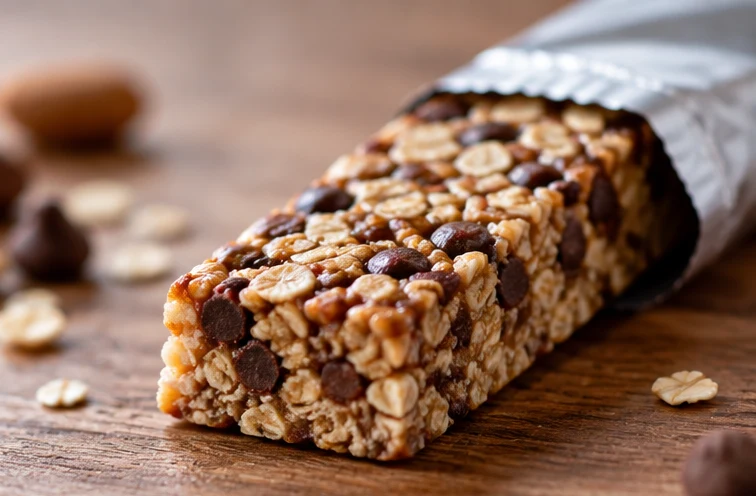
Let's go back to our protein bar. It has about 290 calories with 20 grams of protein, 10 grams of fat (5 of those saturated), 30 grams of carbohydrates, 18 grams of sugar (including 17 grams of added sugar), along with vitamins and minerals listed on the label.
Sounds pretty good, right? It checks many of the boxes we have been taught to look for: plenty of protein, reasonable calories, vitamins and minerals, and something quick that may keep us satisfied until dinner.
Now let's zoom in a bit.
A nutrition label tells us what nutrients are present, but it does not necessarily tell us the whole story of the food itself or how those nutrients got there. Some nutrients occur naturally in the ingredients used to make a food, while others may be added during manufacturing. A protein bar is formulated to deliver a particular nutritional profile — protein, carbohydrates, fats, vitamins and minerals, flavor, texture, convenience, and shelf stability — all packaged into one little bar.
Now Build the Snack From Whole Food
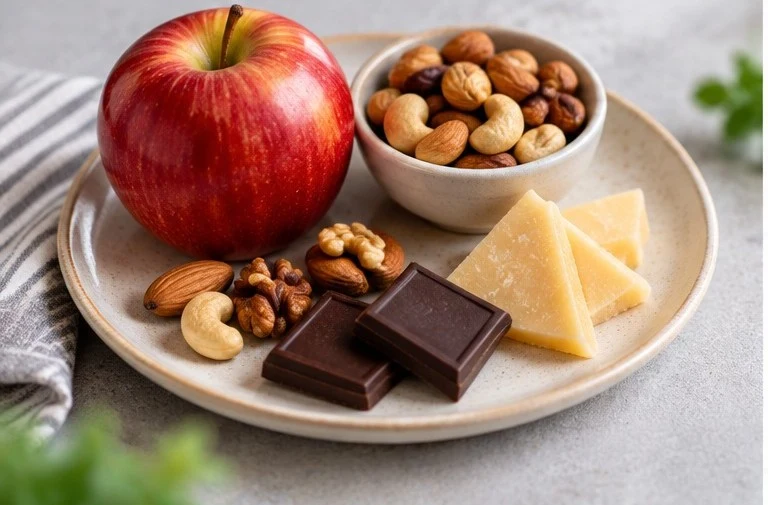
What if, instead of the protein bar, you had a small apple, a 100-calorie pack of mixed nuts, a serving of Parmesan cheese, and two small squares of dark chocolate?
Altogether, this snack comes in at approximately 350 calories with 14–15 grams of protein, 30–32 grams of carbohydrates, about 21 grams of fat, and roughly 6–7 grams of fiber. But the nutrition does not stop at the macros. You are also getting calcium, potassium, magnesium, iron, and smaller amounts of several vitamins, depending on the specific brands and portions used. There are also things that do not typically receive much attention on a standard nutrition label, including polyphenols from cocoa and plant compounds such as quercetin from the apple.
Nothing particularly fancy here — just four ordinary foods put together as a snack.
When we compare the two snacks, the whole-food combination contains about 60 more calories and somewhat less protein. But it also brings more fiber, a variety of naturally occurring nutrients, and several different foods to the table. What you are getting is far more nourishing. Each ingredient in the whole food snack are naturally occurring or have been minimally processed to create a premium fuel source instead of a lower grade fuel source in ultra processed foods.
The point is not that 350 calories are somehow mathematically different from 290 calories. A calorie still measures energy. The difference is what comes packaged with those calories.
Processed vs. Ultra-Processed: What Do Those Words Actually Mean?
Does it really matter where I get my fuel (calories)? Yes, yes it does. First it is important to understand what exactly processed food is. No matter if the food is oatmeal, flour, milk or a box of cereal, they are all processed in some form for consumption. The distinction to make is between the oatmeal, flour, and milk to the box of cereal or pop tarts and pizza rolls.
In its simplest definition, processed food is food that has been changed from its original form before we eat it. Washing, chopping, freezing, cooking, grinding, fermenting, canning, and pasteurizing are all forms of processing. Oats are harvested and hulled to remove their tough outer covering, then may be cut, steamed, or rolled. Wheat can be milled into flour. Milk is pasteurized to reduce disease-causing microorganisms. Fruits and vegetables may be frozen or canned to preserve them. Olives are pressed to make olive oil, and cocoa beans undergo several steps before they become the dark chocolate we recognize. These are all natural and healthy ways to process food. Processing can make food safer, edible, easier to prepare, or easier to store. The calories we get from these types of food are packed with naturally occurring nutrients – vitamins, minerals, proteins, carbs, fats and more.
Premium fuel.
Now lets talk about cereals, pop tarts and pizza rolls. I know, I know I just crossed a line here, but I think it is important to know not only what we are putting in our bodies but also how our bodies are able to use and break down these calories. The ways these 'foods' are processed are much different than the whole foods we just talked about. These fall under the ultra processed food category meaning the food, or food ingredients are broken down into components and refined or modified. They are then combined into a new formulation.
Take oats for example. Instead of simply rolling an oat and that oat is sold at stores for oatmeal, ultra processed oats would be something like taking the oat and adding protein isolates, refined starches, extracted oils, syrups or sugars and combining them with flavors, emulsifiers, stabilizers, colors, sweeteners, vitamins/minerals or other products to create a finished product (cereal).
So instead of:
Oat → steamed and rolled → rolled oats.
Food components → refined/extracted ingredients → formulation + additives → cereal.
You go from taking a food source that is rich in important nutrients to something that even though is quick, easy and an on the go food is not necessarily packed with the same nutrients. This ultra processing not only changes the quality of the calories (energy) but can sometimes cause a check engine light to go off in our bodies. Some of the 'additions' in ultra processed foods could cause an immune response because our gut cannot process them. What happens when we are inflamed? Our bodies begin to misfire and sputter because the fuel (calories) we are feeding it are not premium quality. We see this in IBS symptoms, mood changes like anxiety and depression, high blood pressure, pain in joints and the list goes on and on. And instead of maintaining a healthy weight we ever so slightly begin noticing a shift on the scale and the calorie goblins that shrink our clothes overnight in the closet.
That does not mean every cereal or protein bar is nutritionally identical. It means the word processed by itself does not tell us enough. We have to look at the actual food, the ingredients, and the overall nutritional pattern.
So Why Does Food Quality Matter?
Whole and minimally processed foods often bring more than calories alone. Depending on the food, they may provide fiber, protein, healthy fats, vitamins, minerals, and naturally occurring plant compounds such as polyphenols.
Diets high in ultra-processed foods, on the other hand, can make it easier to consume large amounts of refined carbohydrates, added sugars, sodium, and calorie-dense foods while leaving less room for fiber-rich whole foods. Research has also linked dietary patterns high in ultra-processed foods with a number of poorer health outcomes. That does not mean one protein bar causes disease, and it certainly does not mean every processed food belongs in the same category.
A protein bar on a hectic afternoon can absolutely have a place in real life. But if most of our meals and snacks come from products engineered for convenience, we may be missing the variety and nourishment that comes from regularly eating actual foods.
The Arc Takeaway: Come Back to the Table
At Arc Wellness, nutrition is not simply about keeping the scale in check or chasing the perfect macro count. We want to understand how you actually eat, what fits into your life, and how we can help you build a way of eating that nourishes you.
That often means coming back to foods we recognize: fruits, vegetables, beans, lentils, nuts, seeds, eggs, dairy if tolerated, whole grains, fish, meats, herbs, spices, and meals made from ingredients that still resemble where they came from.
But I think there is another piece of nourishment we have forgotten.
The table used to feed more than our bodies. It gave us a place to slow down, reflect on the day, connect with the people we cared about, and leave feeling satisfied in ways that had nothing to do with a nutrition label.
So I encourage you to come back to the table.
Choose whole and minimally processed foods more often. Use convenience when you need it without making convenience the foundation of your diet. Pay attention not only to how many calories you are eating, but to what those calories are bringing with them.
Nourish your body. Connect with the people you love. Enjoy your food.
Fill the tank with premium fuel — and remember that nourishment is about far more than a number on a label.
So I encourage you to come back to the table.
If you're in the St. Louis area, our physician-led team is here to help you build a way of eating that nourishes you.
Book a consultationFrequently Asked Questions
Processed food has simply been changed from its original form, through washing, cooking, milling, or fermenting, to make it safer, edible, or easier to store. Ultra-processed food goes further: ingredients are broken down into components, refined, and recombined with additives, refined starches, and sweeteners to create an entirely new formulated product.
A calorie always measures the same unit of energy, but two foods with a similar calorie count can differ dramatically in what else they provide. Whole and minimally processed foods tend to bring fiber, protein, vitamins, minerals, and plant compounds along with their calories, while ultra-processed foods are often engineered mainly for taste, convenience, and shelf life.
Diets high in ultra-processed foods have been linked to more refined carbohydrates, added sugar, and sodium, and to a number of poorer health outcomes, while leaving less room for fiber-rich whole foods. That does not mean any single processed snack is harmful, but the overall pattern of what you eat matters.
At Arc Wellness, nutrition isn't about chasing a perfect macro count. We help you understand how you actually eat, choose whole and minimally processed foods more often, and build a way of eating that truly nourishes you.

Invest in You.Live Fully.Age Intentionally.
We look forward to meeting you
— Dr. Jabbar
We look forward to meeting you
— Dr. Jabbar