
The Skinny on Fiber
Why this overlooked nutrient may be one of the most important things on your plate.
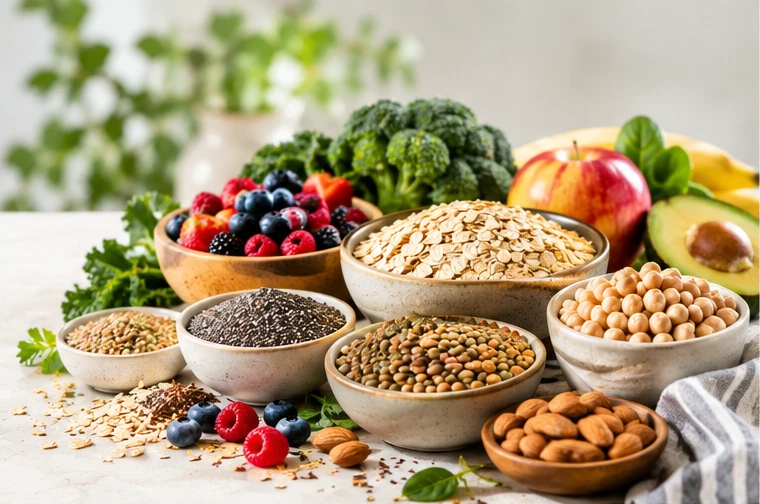
Fiber has a PR problem.
Most people hear fiber and immediately think bowel movements, bran cereal, or something their grandmother stirred into orange juice. We were never really taught why we need fiber, what it actually does, or how essential it is to so many processes in our bodies. Even though it works quietly behind the scenes, fiber deserves a leading role right alongside protein and other essential nutrients.
So why did our grandparents make us eat that dreaded bowl of oats?
Fiber plays an important role in blood sugar control, keeping us full, maintaining healthy cholesterol levels, supporting metabolic health, and even healthy aging. And let's not forget its importance to gut health and the microbiome.
If we are honest, fiber deserves far more credit than simply keeping us regular—or making little boys giggle because of the gas bubbles it causes.
What Exactly Is Fiber?
Fiber is complex. To complete all of the missions listed above, it needs to be.
In the simplest terms, fiber is the part of the plants we eat that our bodies can't completely digest. Just because our bodies cannot absorb and use fiber the same way they use protein, fat, and other carbohydrates doesn't mean it isn't useful. In fact, the very reason fiber can perform so many of its important jobs is because we don't completely digest it.
To understand how this works, it helps to look at three ways we commonly talk about fiber: soluble, insoluble, and prebiotic fibers. These aren't always completely separate categories—some fibers have overlapping properties—but each helps explain a different job fiber can perform in the body.
Soluble Fiber
- Soluble fiber absorbs water and forms a gel, slowing digestion and supporting a steadier glucose response. This slower digestion can help you feel fuller longer while helping prevent the rapid rise and fall in blood sugar that can leave you hungry again soon after eating.
- This is also one of the reasons the form of our food matters.
- Whole foods naturally come packaged with the nutrients our bodies need. When we rely heavily on ultra-processed foods, much of the natural fiber has often been removed along the way. Foods closer to their original form tend to bring fiber along with vitamins, minerals, and other nutrients—and they often leave us feeling more satisfied.
- Fiber isn't a weight-loss gimmick. It is simply part of eating in a way that naturally supports fullness, blood sugar control, and a healthy weight.
Prebiotic Fiber
- Certain fibers also act as prebiotics, meaning they are fermented by beneficial bacteria living in our gut. During this process, these microbes produce compounds called short-chain fatty acids, including butyrate.
- These compounds help nourish the cells lining the colon and support a strong intestinal barrier. Why does that matter? Our intestinal lining acts as an important barrier between what travels through our digestive tract and the rest of our body. Supporting that barrier is one part of maintaining a healthy gut and a well-regulated immune and inflammatory response.
- In other words, when we eat certain types of fiber, we aren't only feeding ourselves. We are feeding the enormous community of microbes living inside us—and those microbes have jobs to do, too.
Insoluble Fiber
- Insoluble fiber works a little differently. It adds bulk to stool and helps move waste through the digestive tract, making it an important part of regular, healthy bowel movements.
- Fiber literally keeps you going.
What Does Fiber Have to Do With Cholesterol?
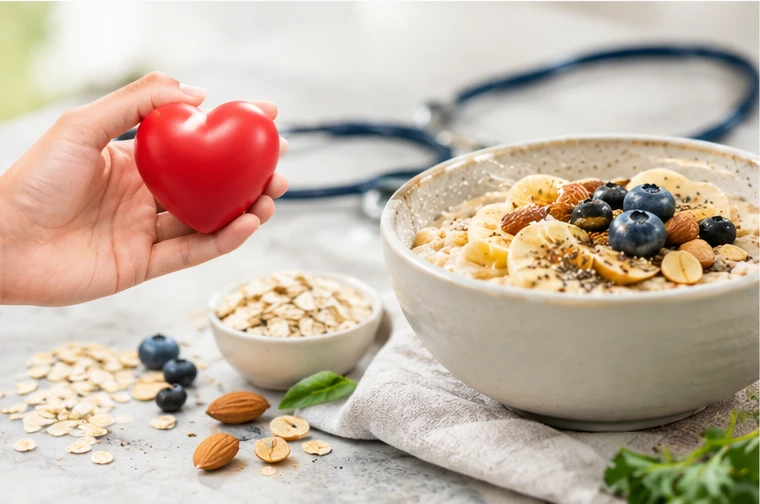
Fiber can also play an important role in maintaining healthy cholesterol levels.
LDL particles carry cholesterol through the bloodstream. When too many atherogenic particles are circulating, some can become trapped within the walls of our arteries and contribute to inflammation and plaque formation over time. This process, called atherosclerosis, can narrow and stiffen the arteries and increase the risk of heart attack and stroke.
Here is where soluble fiber comes in.
Soluble fiber forms a gel in the digestive tract that can trap some bile acids and carry them out of the body in stool. Because the liver uses cholesterol to make new bile acids, it pulls cholesterol from the bloodstream to replace what was lost. Over time, this can help lower LDL cholesterol.
The Bean Problem: “Fiber Makes Me Bloated”
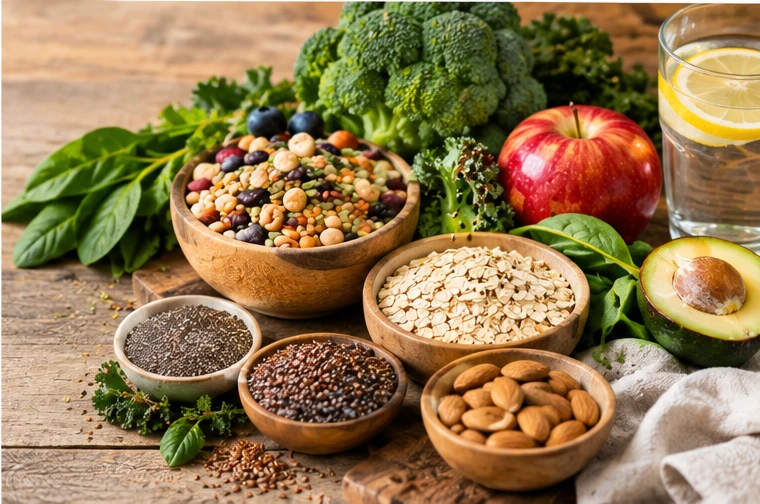
Fiber gets a bad rap when it comes to bloating and gas.
When fall comes along and that first batch of chili is made, the whole house—and your friends sitting around the firepit—feels the impact.
That doesn't necessarily mean your body can't handle fiber or that you shouldn't have eaten the chili. Often, the problem is simply that we have increased our fiber intake too quickly. Certain fibers are fermented by gut bacteria, and that fermentation naturally produces gas.
If your normal diet is relatively low in fiber and you suddenly introduce a giant bowl of beans, lentils, vegetables, and whole grains, your digestive system may have a few things to say about it.
Start small, gradually work your way toward your fiber goal, drink enough water, and stay consistent. Your gut microbiome needs a little time to adjust, too. And for people with significant or persistent digestive symptoms, increasing fiber may need to be individualized rather than following a one-size-fits-all approach.
Don't Just Count Grams. Count Plants.
Nutritionally, a commonly used guideline is around 14 grams of fiber for every 1,000 calories consumed. That may sound like a lot, but it becomes surprisingly manageable when fiber-rich foods are simply part of the way we eat.
Beans. Lentils. Vegetables. Fruits and berries. Nuts and seeds. Whole grains. Even herbs and spices.
Instead of obsessing over a number, start looking at the variety of plants on your plate.
What could that look like in a normal day?
Breakfast
Oats, chia seeds, and berries
Lunch
Lentils or beans with vegetables
Snack
An apple and almonds
Dinner
Vegetables with whole grains and/or beans
Dessert
Berries, fruit, and nuts
Suddenly, getting 25–30 grams of fiber doesn't have to mean eating a bowl of cardboard cereal.
The Arc Takeaway: Happy Gut, Happy Self
Fiber isn't something we eat simply to check a nutrition box. It is one of the clearest examples of why whole food matters.
When we eat plants as close to their original form as possible, we are nourishing ourselves while also feeding the enormous microbial ecosystem living inside us.
Nourishment is about much more than simply eating. When we give our bodies what they need to support these interconnected processes, we are building the foundation to live healthier for longer—and to enjoy those years more fully.
When our gut is happy, the rest of our body tends to be happier, too.
So eat the beans.
And if they make you a little gassy, go ahead and giggle.
Your gut microbes are having dinner, too.
Want personalized guidance on nutrition and gut health?
If you're in the St. Louis area, our physician-led team is here to help you look at the whole picture—not just a number on a nutrition label.
Book a consultationFrequently Asked Questions
A commonly used guideline is about 14 grams of fiber for every 1,000 calories consumed, which works out to roughly 25–30 grams a day for most adults. Rather than tracking grams exactly, aim for a wide variety of plants at each meal—beans, lentils, vegetables, fruits, nuts, seeds, and whole grains.
Soluble fiber absorbs water and forms a gel that slows digestion and supports steadier blood sugar. Insoluble fiber adds bulk to stool and helps move waste through the digestive tract. Prebiotic fiber is fermented by beneficial gut bacteria, which produce compounds that help nourish the cells lining the colon and support a strong intestinal barrier.
Bloating usually happens when fiber intake increases too quickly. Gut bacteria ferment certain fibers, and that fermentation naturally produces gas. Increasing fiber gradually, drinking enough water, and staying consistent gives the gut microbiome time to adjust.
Yes. Soluble fiber forms a gel in the digestive tract that traps some bile acids and carries them out of the body in stool. Because the liver uses cholesterol to make new bile acids, it pulls cholesterol from the bloodstream to replace what was lost, which can help lower LDL cholesterol over time.
Whole, minimally processed plant foods are the best sources: beans, lentils, vegetables, fruits and berries, nuts and seeds, whole grains, and even herbs and spices. Foods closer to their original form naturally bring fiber along with vitamins, minerals, and other nutrients.
Want personalized guidance on nutrition and gut health? Learn more about Arc Wellness gut health care.

Invest in You.Live Fully.Age Intentionally.
We look forward to meeting you
— Dr. Jabbar
We look forward to meeting you
— Dr. Jabbar